Tracing Player Journeys Through Wagering Thresholds in Reload and Cashback Structures
Written by Yves Krause · Sep 8, 2026
Tracing Player Journeys Through Wagering Thresholds in Reload and Cashback Structures
Player journeys in online gaming environments often follow predictable paths when reload bonuses and cashback structures come into play, with wagering thresholds serving as key checkpoints along the way. These thresholds determine when players unlock rewards or move to the next stage of bonus activation, and data from industry tracking systems shows consistent patterns across multiple markets. Researchers at various institutions have mapped these routes by analyzing deposit sequences, wager accumulation rates, and redemption events, revealing how participants navigate requirements that typically range from 10x to 40x the bonus amount.
Mechanics of Reload Bonuses and Their Thresholds
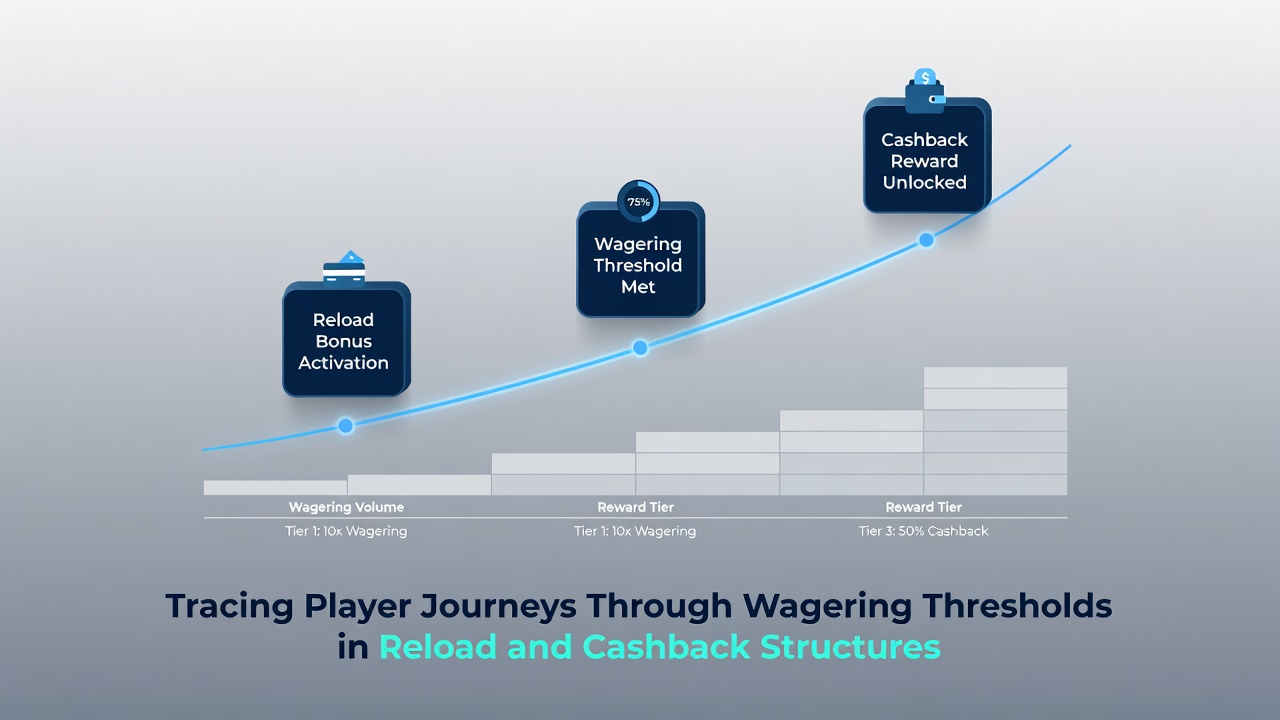
Reload bonuses trigger on subsequent deposits after an initial welcome package, and the associated wagering thresholds require players to meet specific play volumes before funds convert to withdrawable cash. Operators structure these thresholds differently by region, with North American platforms frequently applying 25x multipliers on combined deposit and bonus totals while European sites lean toward lower figures around 20x. Those who study player data note that individuals often spread their wagers across multiple sessions to avoid rapid depletion of bankrolls, a behavior that extends the time spent reaching each milestone.
Tracking systems record every spin or hand as it contributes toward the threshold, and once the target hits, the bonus balance either unlocks fully or rolls into a cashback calculation. This process creates a layered journey where early deposits feed into later rewards, and figures from the Canadian Gaming Association indicate that average completion rates sit near 65 percent for reload offers when thresholds stay under 30x.
Cashback Structures and Loss Recovery Paths
Cashback offers reimburse a percentage of net losses over a defined period, yet they too incorporate wagering thresholds that players must clear before receiving the rebate. These thresholds commonly sit at 1x the cashback amount, though some programs layer additional play requirements on top to prevent immediate withdrawals. Observers tracking behavior in Australian markets report that participants tend to increase bet sizes near the end of a cashback cycle to maximize the rebate value, which in turn accelerates threshold progress but raises variance in outcomes.
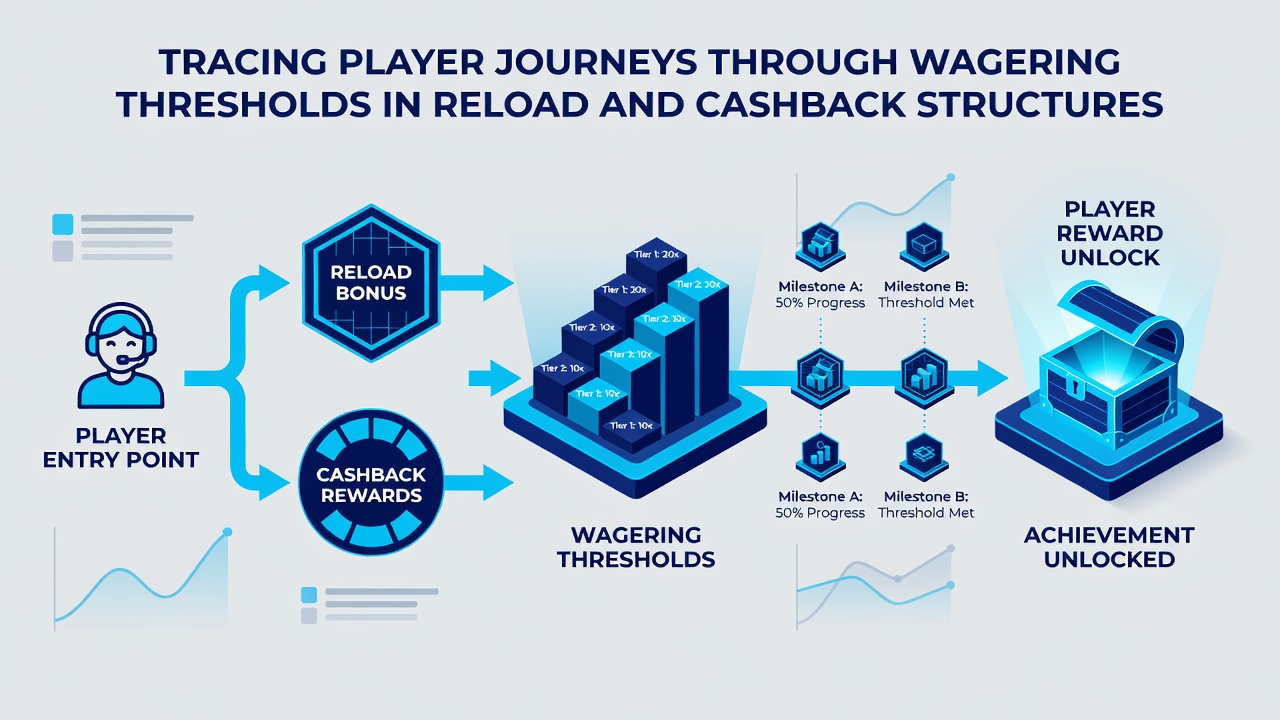
The interaction between reload bonuses and cashback becomes evident when a player receives a reload on Monday, plays through its threshold by Wednesday, then qualifies for cashback on Thursday based on the same activity. This overlapping creates a continuous loop where one structure feeds the next, and reports compiled by the University of Nevada Reno highlight that such combined journeys increase session length by an average of 40 percent compared to standalone promotions.
Mapping the Complete Player Journey
Experts mapping these journeys divide them into distinct phases: deposit and claim, active wagering accumulation, threshold crossing, reward conversion, and post-reward play. During the accumulation phase, real-time dashboards display remaining requirements, allowing players to adjust strategies such as switching games with higher contribution rates toward the threshold. Data shows that slots typically contribute 100 percent while table games contribute 10 to 20 percent, pushing many toward video slot selections to shorten the path.
In September 2026, updated transparency standards from the Nevada Gaming Control Board will require operators to publish average threshold completion times, giving players clearer expectations before they begin. This change builds on existing reporting practices and aligns with similar moves in other jurisdictions, creating a more uniform view of how long typical journeys last under different structures.
Data Patterns Across Markets
Studies conducted across multiple continents reveal that players who engage with both reload and cashback options complete full cycles at higher rates than those using single bonus types. A research paper from the University of Sydney documented that 72 percent of tracked accounts in one sample reached at least one cashback threshold within a 30-day window when reload offers were active simultaneously. These patterns hold across varying stake levels, although higher-stake players tend to clear thresholds faster due to larger per-round contributions.
Operators adjust threshold levels periodically based on aggregate data, lowering multipliers during slower periods to maintain engagement and raising them when redemption volumes spike. The ball remains in the operators' court to balance these adjustments without disrupting player flow, and industry reports confirm that small tweaks of 5x can shift completion rates by up to 15 percent.
Conclusion
Tracing these journeys demonstrates how reload bonuses and cashback structures interconnect through shared wagering thresholds, forming extended pathways that shape player activity over days or weeks. Regulatory developments scheduled for September 2026 will add new layers of visibility to these processes, while ongoing data collection continues to refine understanding of completion rates and behavioral adjustments. The resulting picture remains one of measurable progression points that both operators and analysts monitor closely to maintain balanced promotional frameworks.